

When it comes to men's winter wear, wool cardigans stand out as a timeless and practical choice. As a dedicated supplier of men's wool cardigans, I often encounter questions about the warmth - to - weight ratio of these garments. Understanding this ratio is crucial for both consumers and retailers, as it directly impacts the comfort, functionality, and overall value of the product.
What is the Warmth - to - Weight Ratio?
The warmth - to - weight ratio is a measure that compares the amount of warmth a material or garment provides to its weight. A high warmth - to - weight ratio means that the garment can keep you warm without being overly heavy, which is highly desirable, especially for those who need to stay active or travel.
Wool, as a natural fiber, has long been recognized for its excellent warmth - to - weight ratio. It contains millions of tiny air pockets within its fibers. These air pockets act as insulators, trapping body heat and preventing it from escaping. At the same time, wool is relatively lightweight compared to some other insulating materials, such as down.
Factors Affecting the Warmth - to - Weight Ratio of Men's Wool Cardigans
Wool Type
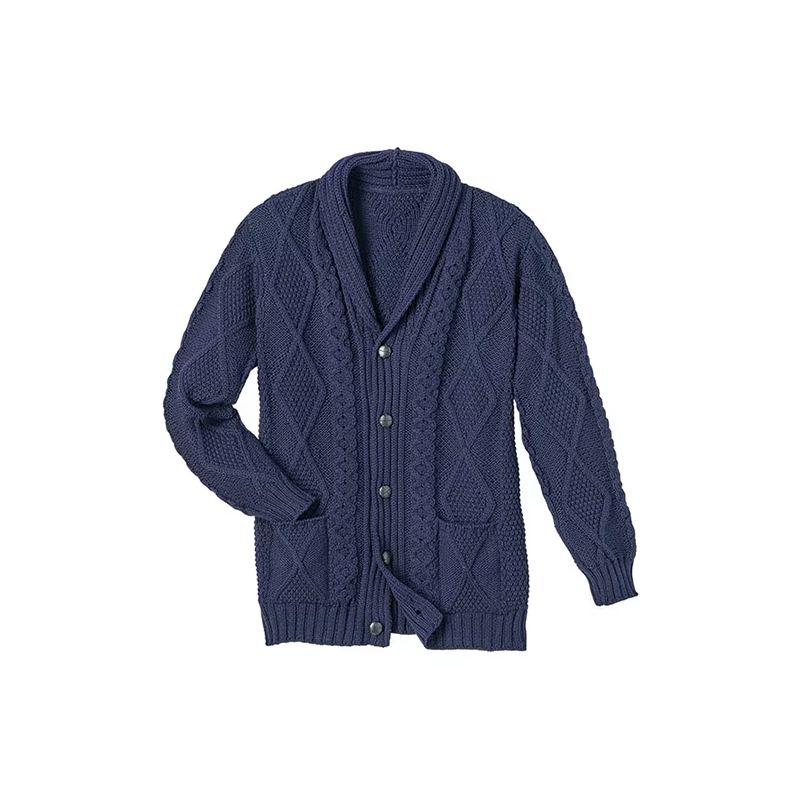
There are different types of wool used in men's cardigans, and each has its own characteristics. Merino wool, for example, is known for its fine fibers. These fine fibers create a dense network of air pockets, resulting in a high warmth - to - weight ratio. Merino wool is also soft against the skin, making it a popular choice for men's cardigans. You can explore our Men's Merino Wool Shawl Collar Cardigan, which combines the warmth of Merino wool with a stylish shawl collar design.
On the other hand, coarse wool may not have as high a warmth - to - weight ratio. Coarse wool fibers are larger and may not trap air as effectively. However, coarse wool can be more durable and may be suitable for more rugged outdoor activities.
Knit Density
The way the wool is knitted also affects the warmth - to - weight ratio. A tight - knit cardigan will generally have a higher ratio because it reduces the amount of air that can pass through the fabric. Tight - knit cardigans are better at retaining heat, but they may also be a bit heavier. Loose - knit cardigans, while lighter, may not provide as much warmth as they allow more air to circulate.
Cardigan Design
The design of the cardigan can impact its warmth - to - weight ratio. For instance, a cardigan with a high collar can help keep the neck warm, reducing heat loss from this area. Long sleeves also contribute to overall warmth. Additionally, the presence of pockets can add a bit of weight but may not significantly affect the warmth - to - weight ratio if the design is well - thought - out. Our Mens Wool Cardigan with Pockets offers both functionality and warmth.
Measuring the Warmth - to - Weight Ratio
Measuring the warmth - to - weight ratio of men's wool cardigans is not an exact science, but there are some methods that can be used. One common approach is to use a thermal resistance test. This test measures how well a fabric or garment resists the transfer of heat. The higher the thermal resistance, the warmer the garment is.
Another way is to simply compare the weight of different cardigans while considering their perceived warmth. Consumers can try on different cardigans in a controlled environment and note how warm they feel and how heavy the cardigan is.

Benefits of a High Warmth - to - Weight Ratio
Comfort
A high warmth - to - weight ratio means that men can stay warm without feeling weighed down. This is especially important for those who are on the go, such as travelers or men who have active jobs. They can move freely without the burden of a heavy sweater.
Versatility
Cardigans with a high warmth - to - weight ratio can be worn in a variety of settings. They can be layered under a coat in extremely cold weather or worn on their own in milder temperatures. Our Mens Wool Sleeveless Cardigan is a great example of a versatile piece. It can be worn over a shirt for a bit of extra warmth in an office setting or layered with other clothing for outdoor activities.
Energy Efficiency
When a person is wearing a garment with a high warmth - to - weight ratio, they may need to rely less on external heating sources. This can lead to energy savings, both at home and in public spaces.
Our Men's Wool Cardigans and the Warmth - to - Weight Ratio
As a supplier of men's wool cardigans, we take great pride in offering products with an excellent warmth - to - weight ratio. We carefully select the wool types, control the knit density, and design our cardigans to maximize warmth while minimizing weight.
Our cardigans are made from high - quality wool, including Merino wool, which is known for its superior insulation properties. We use advanced knitting techniques to ensure a tight - knit structure that traps heat effectively. At the same time, we pay attention to the overall design of the cardigan, making sure it is not only warm but also stylish and comfortable.
Conclusion
The warmth - to - weight ratio is an important factor to consider when choosing men's wool cardigans. Wool, with its natural insulating properties, generally offers a good ratio, but different types of wool, knit densities, and designs can affect this ratio. Our men's wool cardigans are designed to provide the best balance of warmth and weight, ensuring comfort, versatility, and energy efficiency.
If you are interested in our men's wool cardigans and would like to discuss procurement, please feel free to reach out. We are always ready to have in - depth discussions about our products and how they can meet your specific needs.
References
- "Wool: Properties and Applications" by Textile Institute
- "Thermal Comfort in Clothing" by American Association of Textile Chemists and Colorists